
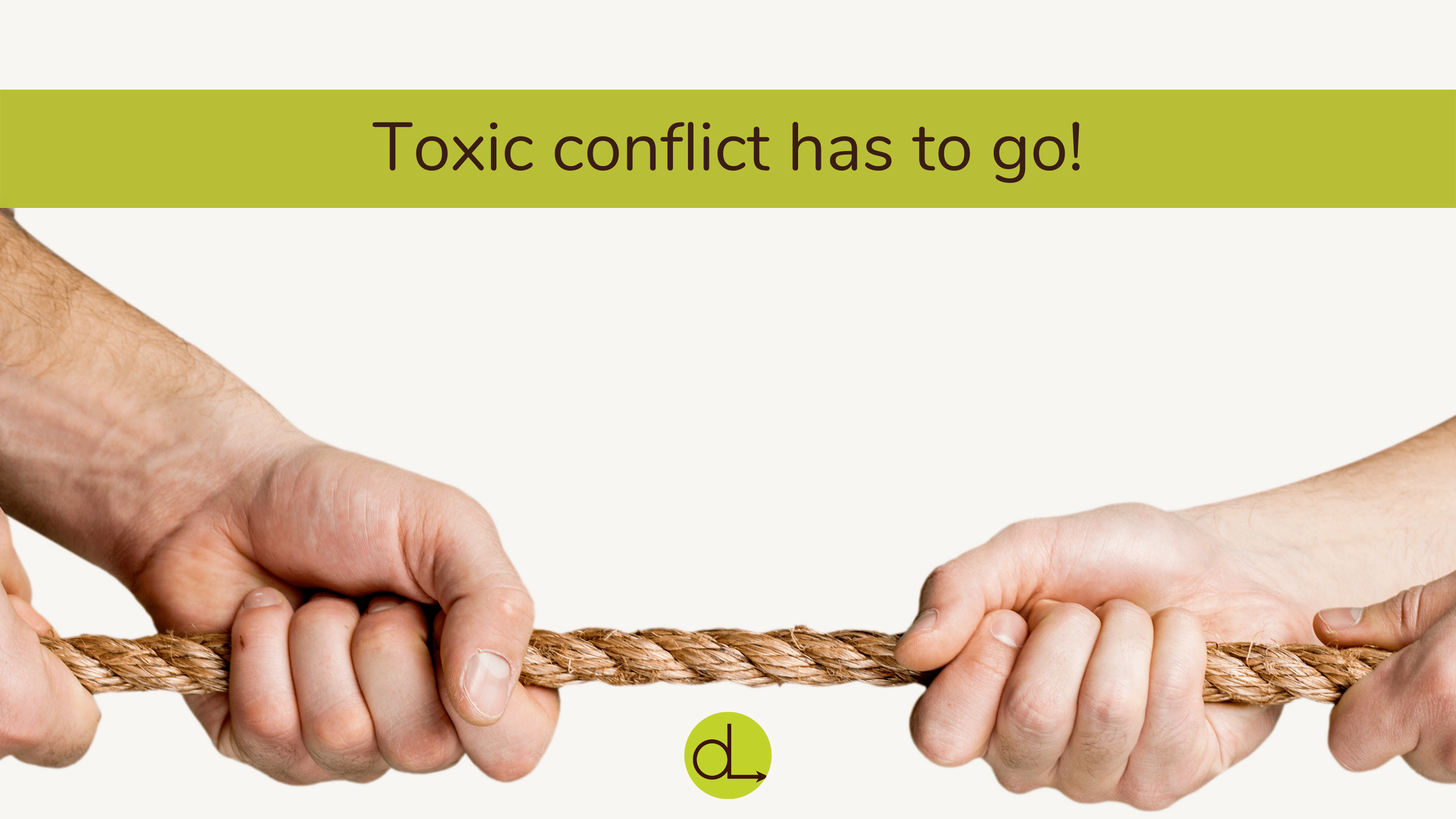
Why Workplace Conflict Is Healthy As Long As It Isn’t Toxic
My clients often tell me they don’t like workplace conflict, so they try to avoid it altogether. But when I dig a little deeper, I usually find it’s not conflict they’re afraid of. It’s toxic conflict that causes the hair on the back of your neck to stand up.
They’ve experienced yelling. Power struggles. Passive-aggressive behavior. People pulling in opposite directions. That kind of conflict feels personal, unsafe, and destructive. And when conflict gets toxic, that’s when teams spiral into dysfunction.
But here’s the surprising truth: high-performing teams don’t avoid workplace conflict. They embrace it! In fact, healthy conflict is one of the hallmarks of successful, innovative teams. The key is learning how to distinguish between productive disagreement and harmful behavior.
According to The Gottman Institute, there are four toxic behaviors that undermine healthy relationships. The same applies in the workplace. These behaviors, known as “The Four Horsemen,” are universal red flags, no matter the setting or power dynamics.
The Cost of Avoiding Workplace Conflict
If you think avoiding conflict is saving time or reducing stress, the data says otherwise. According to the 2024 State of Workplace Conflict report by the Workplace Peace Institute, unresolved conflict is doing serious damage to organizations financially, emotionally, and culturally.
Here are a few eye-opening stats:
- 85% of employees experience some form of conflict at work.
- 67% of those say the conflict has a negative impact on their engagement and performance.
- 81% of HR leaders say unresolved conflict leads to increased turnover.
- Only 27% of organizations provide conflict resolution training or resources.
These numbers reveal a critical gap: most teams are facing workplace conflict regularly, yet very few are being equipped to handle it well. And here’s the kicker: when left unaddressed, workplace conflict doesn’t just go away. It festers. It becomes toxic. It leads to burnout, disengagement, and the breakdown of trust across teams. This is why we emphasize conflict resilience as a core component of being a Thoughtfully Fit® Team. When your team has the tools to recognize, manage, and grow through conflict, you reduce friction and increase alignment. You can prevent problems and you can unlock performance.
What Makes Workplace Conflict Toxic?
1. Criticism
There’s a difference between offering feedback and making it personal.
✅ Healthy: “The deadline for this was last week, and I’m disappointed I still don’t have it.”
❌ Toxic: “You never meet your deadlines. You’re the reason this team is always behind.”
Criticism attacks the person, not the behavior. That quickly erodes trust on a team.
2. Defensiveness
Criticism often triggers defensiveness, which is really just another form of blame. It shifts responsibility and creates a toxic cycle of finger-pointing, where no one feels safe enough to be honest or accountable.
3. Contempt
When criticism and defensiveness are left unchecked, contempt creeps in. This is the most destructive form of workplace conflict. You know it’s present when someone’s name in your inbox triggers irritation. Or when eye-rolls and sarcasm become the norm. Even if nothing is said out loud, contempt shows up in tone, body language, and disengagement.
4. Stonewalling
Once contempt is present, stonewalling usually follows. People shut down emotionally or disengage altogether. They stop contributing. They ignore emails. They tune out in meetings. It’s a way of self-protecting, but it fractures connection and collaboration.
Turning Workplace Conflict Into a Growth Opportunity
Toxic workplace conflict often emerges when teams haven’t intentionally designed how they want to handle disagreements. But here’s the good news. Conflict itself isn’t the problem. It’s how we handle it.
At Thoughtfully Fit®, we believe you always have control and you always have choices. Here are some practical ways to respond when conflict arises:
- If you find yourself blaming, choose curiosity and ask some questions to understand them better.
- If you’re getting defensive, choose to take ownership of even a small part of the issue.
- If contempt is creeping in, choose to re-engage in dialogue and set aside anger, at least temporarily.
- And if you’re stonewalling, take a short break (and let others know), then return when you’re ready to collaborate.
How to Foster Healthy Workplace Conflict as a Leader
If you’re in a leadership or management role, your team is taking cues from you on how to navigate conflict. Whether you’re modeling avoidance or healthy engagement, it sets the tone for everyone else.
Here are a few ways to lead by example:
- Set team agreements around how to handle disagreements, including expectations for communication, respect, and decision-making. Make these agreements visible and revisit them regularly.
- Normalize discomfort. Remind your team that conflict can feel awkward or messy—and that’s okay. The goal isn’t to avoid discomfort, it’s to work through it productively.
- Reward healthy conflict. When a team member respectfully challenges an idea or voices a different perspective, acknowledge it. This helps create psychological safety and encourages others to do the same.
By proactively fostering a culture where disagreement is not only allowed but welcomed, you empower your team to make better decisions and grow stronger together.
But What If They Are the Problem?
You might find yourself saying, “But Darcy, it’s not me. My boss blames me for everything. My colleague is the defensive one. She’s showing contempt towards me. The other guy… he’s stonewalling.”
I believe you. But it starts with you. Because we can’t change them.
You control you. You control how you show up in any situation. And sometimes it just takes one person to shift the dynamic of the team. You can choose to be that person.
 One-minute Workout
The next time you’re noticing toxic conflict:
- Pause and get off autopilot. Resist your knee-jerk reaction.
- Think about what toxin is present and what choices you have.
- Act in a healthy, respectful manner.
Can this really be done in a minute? Here’s the truth. It can take a lot of work to remove toxins from a team. But yes, it only takes one minute to shift away from negative conflict.
Start Small. Shift Big.
Managing workplace conflict doesn’t require you to have all the answers. It just requires a willingness to pause, reflect, and respond intentionally. If your team could use help building this skillset, check out our Thoughtfully Fit® coaching and training programs. We’d love to support your growth.


