

Ever feel like your team is stuck in the same cycle—going through the motions and putting out fires instead of making real progress? If so, you’re not alone. Too many teams operate without a clear strategy, leading to frustration, wasted time, and missed opportunities. The good news? A team strategic plan doesn’t have to be complicated, but it does have to be intentional.
Here’s how to get your team aligned and moving in the right direction with four actionable steps.
Team Strategic Planning Step 1: Get Real About Where Your Team Stands
Before you can move forward, you need to understand where you are. This means taking an honest look at your team’s current dynamics, strengths, and roadblocks.
- What’s working well?
- Where are the bottlenecks?
- Are people engaged, or just going through the motions?
- What challenges keep coming up again and again?
Talk to your team. Gather feedback. Pay attention to patterns. This isn’t about pointing fingers—it’s about gaining clarity so you can create a plan that actually makes a difference.
Team Strategic Planning Step 2: Define What Success Looks Like
A team without a vision is like a ship without a compass—drifting aimlessly. Instead of just reacting to problems, take a moment to visualize where you want your team to be.
- What does a high-performing version of your team look like?
- How do you want people to feel about their work?
- What goals should you be working toward?
Get specific. The clearer your vision, the easier it is to create a roadmap to get there.
Team Strategic Planning Step 3: Identify What’s Missing
Now that you know where you are and where you want to go, the next step is to bridge the gap. What’s standing in the way of success?
- Does your team need new skills or resources?
- Are there communication breakdowns?
- Is workload distribution an issue?
- Are people unclear on expectations?
This is where strategic thinking comes in. Instead of slapping a Band-Aid on problems, look for long-term solutions that address the root causes.
Team Strategic Planning Step 4: Take the First Steps (and Keep Going)
Here’s the truth: big changes don’t happen overnight. Instead of overwhelming your team with a massive overhaul, break things down into manageable steps.
- What’s one small change you can implement this week?
- How can you create momentum with quick wins?
- What habits or processes need to shift over time?
Consistency beats intensity. Small, steady progress will get your team further than a one-time push that fizzles out.
Strategic Planning Is a Cycle, Not a One and Done
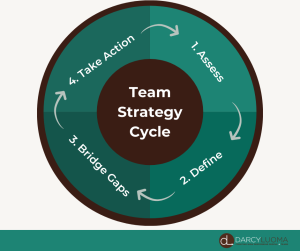
Developing a team strategic plan isn’t about checking a box. It’s a continuous loop of reflection, alignment, and action. Your team’s needs will evolve, challenges will shift, and new opportunities will arise. That’s why it’s not a one-time event; it’s an ongoing process.
Keep the cycle turning, and your team will stay adaptable, focused, and always moving forward.
Frequently Asked Questions
What’s the best way to define success for our team?
Success should be measurable and aligned with both performance and team culture. Consider KPIs like project completion rates, team satisfaction scores, and collaboration efficiency.
How can we identify the root causes of team dysfunction?
Go beyond surface-level symptoms. If deadlines are consistently missed, is it a time management issue, a resource gap, or unclear roles? Conduct one-on-ones or group coaching sessions to dig deeper.
What if our team members have different visions of success?
Alignment is key. Facilitate a team retreat or structured discussions to unify perspectives and set common goals.
What’s a practical way to improve communication in our team strategy?
Establish structured check-ins, like weekly stand-ups or monthly strategic reviews. Consider a team coaching approach to build better dialogue skills.
How do we create accountability without micromanaging?
Set clear milestones and allow for self-management. Implement a system like OKRs (Objectives and Key Results) so progress is visible without constant oversight.
What are some quick wins to build momentum in our strategy?
Start with small process improvements—like standardizing meetings, refining workflows, or implementing leadership training for managers to boost clarity and alignment.
How do we make strategy a continuous habit rather than a one-time event?
Embed strategic thinking into daily operations. Use reflection tools like after-action reviews after projects to assess what worked and what needs improvement.
When should we consider outside support for team strategy?
If your team is avoiding tough conversations, struggles with execution, or feeling stagnant, a team coach can bring fresh insights and facilitate real change.
Looking for more information about team development? Be sure to check out our Leader’s Guide to Building Stronger Teams.


