
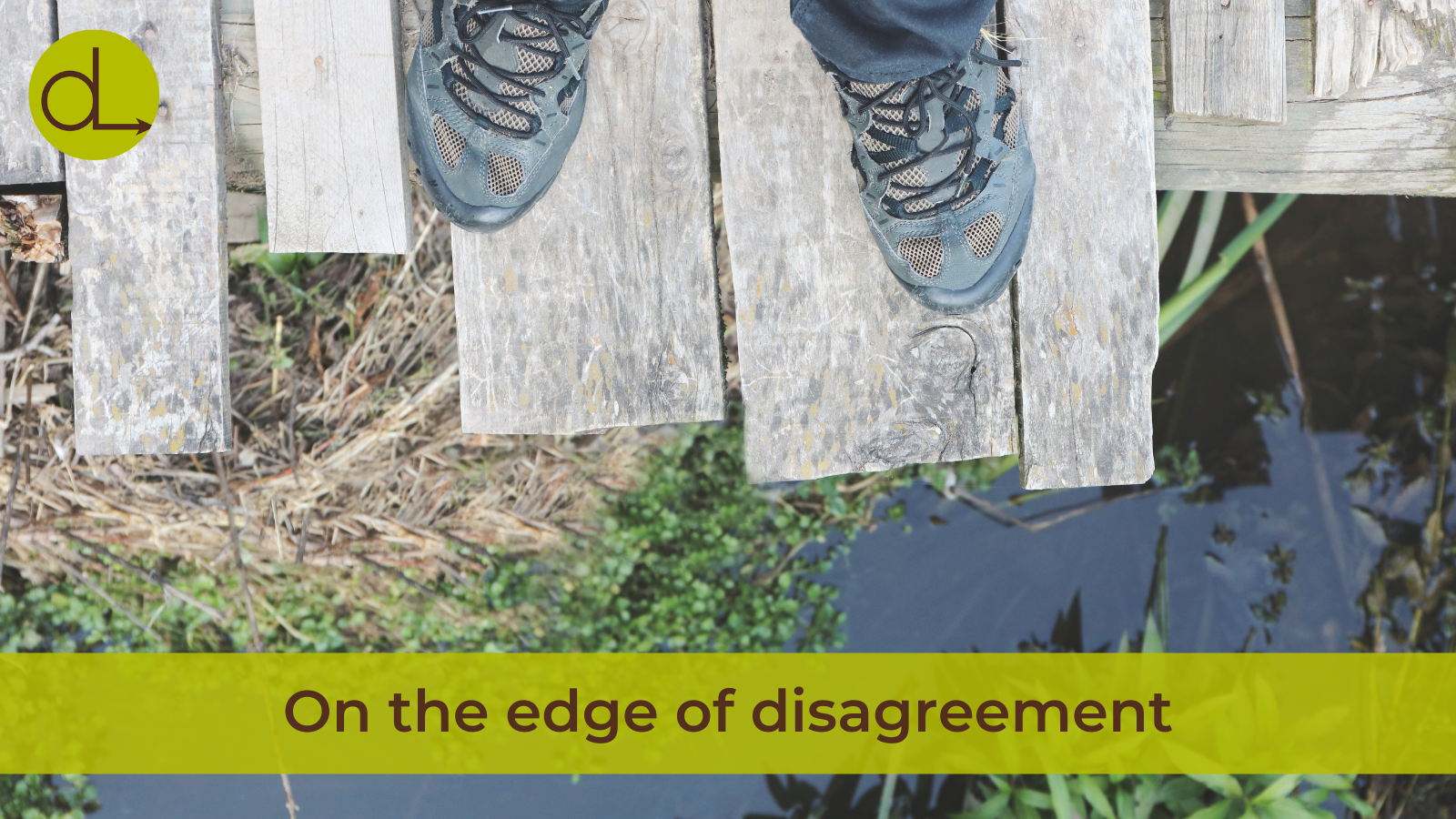
In recent interviews with team members from three different teams, a similar comment came up in each conversation “I don’t think any of us really like conflict.”
When I asked follow-up questions, the phrasing shifted slightly depending on the person. One talked about not liking confrontation. Another mentioned not wanting to step on toes. Someone else explained they didn’t see it as their role to tell a peer that there might be a better way to do things. Different words, same underlying message.
What struck me was that in none of these cases did anyone describe an actual workplace conflict they had been part of with their current team. Even when I asked directly, there were no stories of heated exchanges, no moments where things went off the rails, and no lingering fallout from disagreements that had gone badly. There was no history they were trying to avoid repeating.
They weren’t avoiding conflict so much as letting the fear of it determine how far they were willing to go in conversation. That edge-of-the-cliff feeling where you can sense that if you push on an idea, ask a harder question, or challenge an assumption, something in the team dynamics might shift. Maybe not dramatically. Maybe not even visibly. But enough to make it feel risky and make you wonder whether it’s worth it.
And so instead of testing ideas, teams “protect” relationships. Over time, that quiet tradeoff starts to matter far more than anyone expects.
The Kind of Workplace Conflict Teams Say They Don’t Want
When teams talk about avoiding conflict, they often lump a lot of very different experiences into that one word. Conflict becomes a catch-all for anything that feels tense, emotional, or uncomfortable, even though not all of those things are the same.
Most people aren’t trying to avoid disagreement about the work itself. They don’t mind hearing another perspective. They’re usually open to debate when it stays clearly in the realm of ideas. What they’re actually trying to avoid is the moment when disagreement stops feeling professional and starts feeling personal.
In other words, it’s not that teams are afraid of ideas colliding. They’re afraid of what might happen between people when those ideas collide. (Especially on teams where people are so invested in their work that it seems impossible to separate the person from the idea!) And because that line can feel blurry and unpredictable, the safest move often seems to be staying a step back from it altogether.
That’s where good discussion quietly starts to erode.
When Nothing Bad Has Happened… Yet
One of the hardest parts about this dynamic is that it often exists in teams that have never had a major conflict. There’s no clear reference point for what happens when things get tense, so people fill in the blanks themselves.
They imagine how a disagreement might go.
They replay small moments that felt awkward in the past.
They pay attention to how others react when challenged.
And from that, an unspoken rule forms: Don’t push too hard.
No one announces it. No one writes it down. But people sense it. They learn where the edges are by watching what happens when someone gets close to them. Over time, those edges start to feel fixed, even though they’ve never really been tested.
So the fear of conflict becomes self-reinforcing. The team avoids disagreement to keep things stable, and because nothing bad happens, it feels like the avoidance is working. What’s less visible is the cost that comes with it.
How the Fear of Conflict Quietly Shrinks Good Ideas
This is where the impact shows up, not all at once, but in small, cumulative ways that shape how the team thinks and works together.
1. Ideas Get Edited Before They Ever Hit the Room
When people aren’t sure how disagreement will be received, they start filtering their thinking long before they speak. They anticipate the reactions. They imagine the pushback. They decide which parts of their idea feel safe to share and which parts are better left unsaid.
What makes it into the conversation is often a diluted version of the original thought: reasonable, agreeable, and unlikely to cause friction. What gets left behind are the sharper insights that might have challenged the group in a useful way.
The idea hasn’t gotten weaker because it was flawed. It’s gotten weaker because the environment didn’t feel sturdy enough to hold it.
2. Conversations Stay Polite Instead of Curious
Many teams mistake politeness for productivity. Meetings feel calm. People listen. No one interrupts. On paper, everything looks functional.
But curiosity requires a willingness to stay in the conversation when it gets a little uncomfortable. It means asking follow-up questions that might expose disagreement or surface assumptions that haven’t been named. When the fear of conflict is present, curiosity is often the first thing to go.
The discussion moves forward, but it doesn’t deepen. Everyone leaves with a shared understanding of what was said, not necessarily a shared understanding of what was meant.
3. Silence Starts to Feel Like the Safest Option
In teams where disagreement feels risky, silence can take on a strange kind of virtue. Not speaking up gets reframed as being respectful, supportive, or easy to work with.
People tell themselves they don’t need to weigh in. Someone else will say it. It’s not worth rocking the boat. And each time that choice is made, it reinforces the idea that staying quiet is the responsible thing to do.
Over time, the team loses access to the full range of perspectives in the room, even though everyone is still physically present.
4. Disagreement Moves Out of the Room
Avoiding conflict in meetings doesn’t eliminate it; it just displaces it. Concerns get voiced privately. Frustrations get shared with people who feel safer. Ideas get debated after decisions have already been made.
This creates a strange split. On the surface, the team appears aligned. Underneath, the real thinking is happening in fragments, without the benefit of collective sense-making.
The opportunity cost isn’t just efficiency. It’s trust.
5. Agreement Begins to Masquerade as Alignment
When teams avoid open disagreement, agreement can start to look like alignment. People say yes, decisions get finalized, and everyone appears to be on board.
But alignment that hasn’t been tested is fragile. It holds until the moment someone has to act on it, invest in it, or explain it to others. That’s often when cracks start to show, not because people were being deceptive, but because they never felt it was safe to fully disagree earlier.
The surprise isn’t that commitment wavers. It’s that anyone expected it to be solid in the first place.
6. Untested Thinking Becomes the Biggest Risk
The irony in all of this is that teams often avoid disagreement to protect relationships, but what they end up protecting most is untested thinking. Ideas don’t get the friction they need to improve. Assumptions go unchallenged. Decisions feel clean, but not necessarily strong.
Over time, the quality of the work reflects that restraint. Not in obvious ways, but in missed opportunities, recurring issues, and a sense that the team isn’t quite operating at its full potential.
Staying in the Conversation Without Going Over the Edge
Pushing on that edge of disagreement doesn’t have to mean confrontation or emotional freefall. For many teams, it’s about finding small ways to stay in the conversation long enough for ideas to actually get better, without feeling like you’re putting the relationship at risk.
Here are a few ways teams begin to do that.
- Naming a clear disagreement:
“I see this differently. Can I share how I’m thinking about it?”
This is about being direct without being combative, and about putting a real perspective on the table instead of circling an idea or shrugging your way through it.
- Sharing a half-formed thought:
“I haven’t fully thought this through, but I want to put an idea on the table.”
This creates room to think out loud without needing to be fully baked or perfectly defended, which can make it easier for others to engage without feeling like they need to brace or respond perfectly.
- Asking a question that focuses the conversation:
“Can we spend a little more time on what problem we’re trying to solve?”
The goal isn’t to corner anyone, but to gently press on the thinking and slow the conversation down just enough to bring more clarity into the room.
- Making it explicit that the relationship matters:
“I want to challenge this idea and also make sure it isn’t feeling personal.”
This takes responsibility for the impact of your words while still trusting that the other person can stay in the conversation with you.
- Naming the tension instead of avoiding it:
“It feels like we’re all being careful here. I’m wondering what we’re not saying yet.”
This is often the smallest move with the biggest impact. This acknowledges what’s happening in the moment without assigning blame and creates an opening for the conversation to move forward more honestly.
A Different Way to Think About Workplace Conflict
The point of these prompts isn’t to get the words perfect. They’re simply ways of testing the edge and staying close enough to disagreement to learn from it, without assuming that any tension means something has gone wrong.
And if these prompts still feel too risky, that’s worth paying attention to. Sometimes it points to something deeper that a team hasn’t had the space to look at yet. But more often than not, it’s simply a sign that people have gotten used to staying farther back from the edge than they actually need to.
The capacity to lean into that disagreement is usually there. The step just hasn’t been taken yet. And that starts not by jumping off the cliff, but by taking one careful step closer to it. Teams that do often notice that the ground below is closer than they thought.

Frequently Asked Questions about Workplace Conflict
What is workplace conflict?
Workplace conflict refers to tension, disagreement, or friction between individuals or groups at work. It can involve differences in ideas, priorities, communication styles, or expectations. While conflict is often viewed as negative, it’s a normal part of working together. The real issue usually isn’t conflict itself, but how teams respond to it. Avoided or unspoken conflict can quietly affect trust, decision-making, and collaboration over time.
Why do teams avoid conflict at work?
Teams often avoid conflict because of the fear of what might happen if disagreement becomes personal. People worry about damaging relationships, being misunderstood, or creating awkwardness that lingers. When the interpersonal risk feels high, staying quiet or agreeing outwardly can feel safer than pushing on ideas, even when those ideas deserve discussion.
Is avoiding conflict bad for teams?
Working to resolve toxic conflict and avoid personal conflict can be a good thing, but consistently avoiding disagreement can limit growth and innovation. When teams prioritize comfort over honest discussion, ideas often go untested, assumptions remain unchallenged, and decisions lack real buy-in. Over time, this can lead to weaker outcomes and quiet frustration. Healthy teams aren’t conflict-free; they’re able to stay in conversation even when things feel a little uncomfortable.
How does fear of conflict affect team performance?
Fear of conflict can cause people to self-censor, hold back ideas, or move disagreement into private conversations instead of addressing it together. Meetings may feel polite and efficient, but important perspectives never fully surface. As a result, teams may appear aligned while struggling with execution later. The impact isn’t immediate, but it accumulates by showing up in missed opportunities and stalled progress.
What’s the difference between disagreement and personal conflict?
Disagreement focuses on ideas, decisions, or approaches to work, while personal conflict feels tied to identity, intent, or character. Many teams are comfortable debating ideas but become cautious when they fear disagreement might be taken personally. When that line feels blurry, people tend to pull back altogether. Clear communication and trust help teams challenge ideas without turning tension into something relationally damaging.
How can teams handle conflict more effectively?
Handling conflict effectively doesn’t require confrontation or dramatic conversations. It often starts with small moves like naming the disagreement clearly and emphasizing the desire to work work through it together. These steps help teams stay engaged in the conflict without it feeling personal. Over time, consistently leaning into disagreement builds confidence that relationships can withstand honest conversation.


