
Ever say something in a meeting that you immediately wished you could take back? You’re not alone. That moment is exactly where emotional intelligence in leadership shows up. Or doesn’t.
Emotional intelligence (EQ) is your ability to notice what you’re feeling, make sense of it, and respond in a way that helps (not harms) the situation. It’s also tuning into what others might be feeling, even when they’re not saying it out loud.
It’s how you stop yourself from rolling your eyes in frustration. It’s how you notice when someone on your team is shutting down. It’s how you make space for real conversations instead of powering through awkward tension and pretending everything’s fine.
Basically: EQ is what separates the leaders people trust from the ones who just have the title.
EQ Takes Practice
Here’s the thing. Emotional intelligence isn’t something you’re born with or without. It’s not a personality trait. It’s a skill. Which means you can build it. But just like building physical strength, it takes time and intention.
You don’t get a strong core from one yoga class. You don’t increase emotional intelligence from one self-awareness workshop. It’s daily reps. It’s uncomfortable moments. It’s trial and error (and trial again).
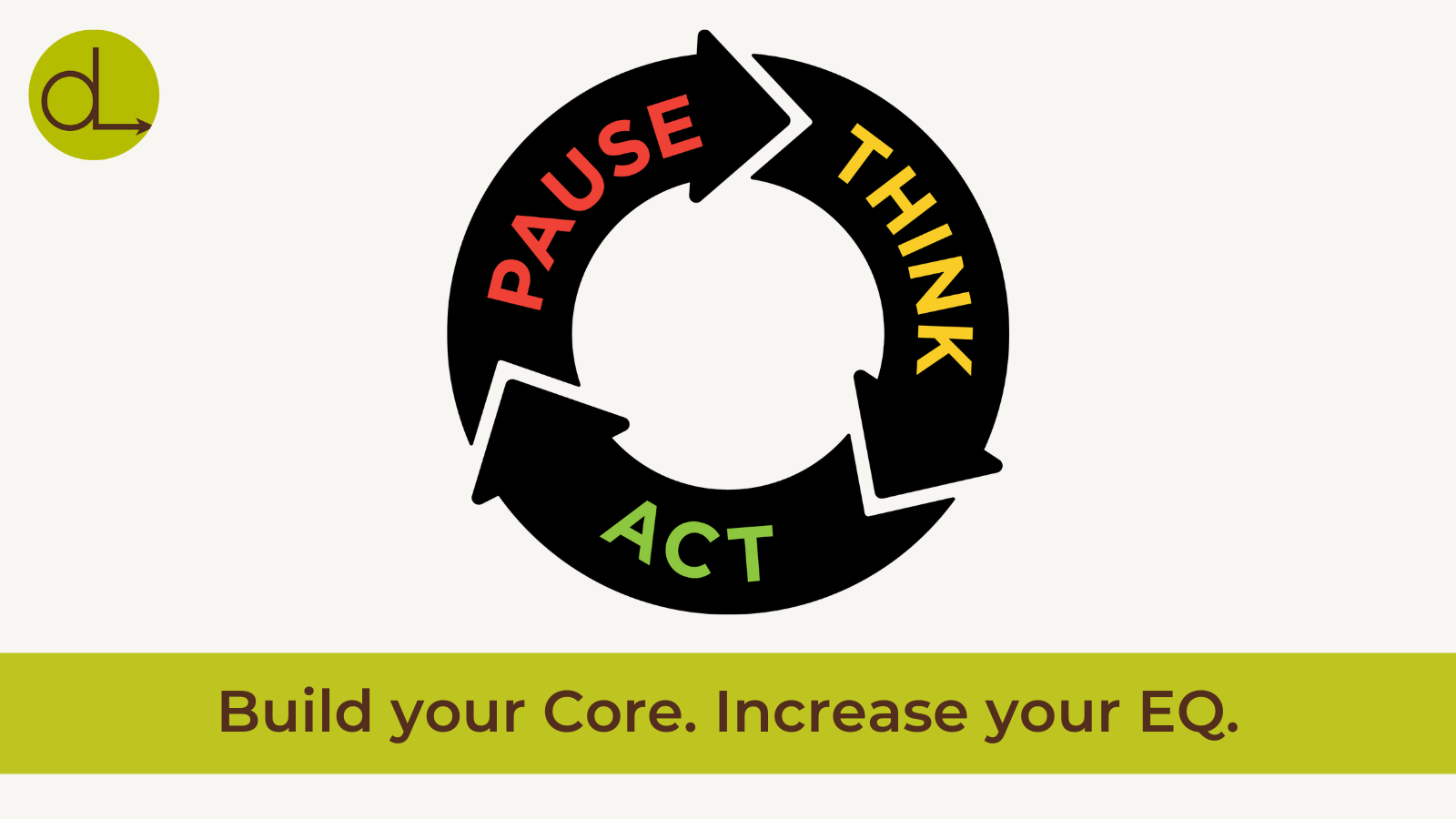
And that’s where Thoughtfully Fit® comes in. The core, Pause. Think. Act. is simple. But it’s not always easy. Especially when emotions are high.
Let’s break it down.
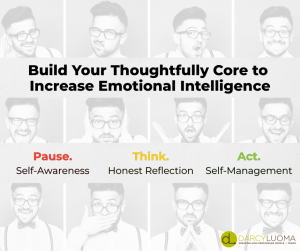
PAUSE → Self-Awareness
First up: Pause.
This is your chance to catch yourself in the moment. To hit the brakes before your mouth says something your brain hasn’t approved. It’s the moment when you feel yourself getting triggered—tight chest, clenched jaw, whatever your tell is, and instead of reacting, you notice.
You don’t have to fix anything yet. You don’t even have to say anything. Just pause.
That pause builds your self-awareness. It’s what lets you recognize, “Oh wow, I’m feeling defensive,” instead of steamrolling through the moment and regretting it later.
THINK → Honest Reflection
Next comes Think. And no, we don’t mean “think happy thoughts.”
This isn’t toxic positivity. It’s honest reflection and a chance to ask yourself some questions.
- Why am I so worked up?
- What’s this reaction really about?
- What story am I telling myself right now?
Thinking helps you slow the spin. It makes space to choose how you want to show up, instead of being stuck in autopilot. You’re not ignoring your emotions. You’re understanding them. That’s emotional intelligence at work.
ACT → Self-Management
Then, and only then, you Act.
This is the part where you choose how to move forward and actually do it. Not react out of frustration. Not blame someone else for “making you angry.” You own it. You lead from it.
That’s self-management. And it’s a game changer.
Because let’s be honest: it’s easy to be the leader you want to be when everything’s going smoothly. But in those moments when the meeting goes sideways, when the email hits a nerve, when the team’s energy is off—that’s when your EQ either carries you… or cracks.
Strong Core. Strong Emotional Intelligence. Strong Leadership.
Pause. Think. Act. isn’t magic. But it is effective.
It builds your emotional intelligence in leadership by helping you practice staying present, being real with yourself, and responding with intention.
Over time, this practice:
- Builds trust with your team
- Reduces reactivity (and regret)
- Creates space for better decisions and stronger relationships
And just like physical fitness, the more consistently you train, the stronger you get.
So if you’ve been feeling like you’re leading on fumes, or like your emotions are leading you, try starting with one Pause. One beat of self-awareness. One breath before the next word.
Because leadership isn’t about being perfect. It’s about being present. Especially when it counts.
FAQs: Building Emotional Intelligence in Leadership
What are the signs of high emotional intelligence in a leader?
Leaders with high EQ don’t just “keep their cool,” they create calm for others. They ask thoughtful questions, listen without jumping in to fix, and respond instead of react. They’re self-aware enough to own their mistakes and confident enough to navigate conflict without ego.
How does emotional intelligence impact team performance?
Teams led by emotionally intelligent leaders tend to have stronger trust, clearer communication, and fewer unresolved tensions simmering under the surface. It’s not just good vibes. It’s what helps build high-performing teams with staying power.
Can emotional intelligence be taught in leadership training programs?
Absolutely. While some people may have a natural head start, EQ can absolutely be developed through leadership training programs, executive coaching, and consistent practice using frameworks like Thoughtfully Fit.
What’s the difference between emotional intelligence and empathetic leadership?
They’re related, but not interchangeable. Emotional intelligence is your inner skill set of knowing and managing your emotions. Empathetic leadership is how you apply that skill to support others. One is the muscle. The other is how you use it.
How can leaders practice emotional intelligence during tough conversations?
By pausing before they react, getting curious about their own feelings, and asking themselves what the other person might be experiencing. It’s not about fixing or faking, it’s about creating space for honesty and forward momentum.
Is emotional intelligence part of a leadership development program?
The good ones? Yes. Any effective leadership development program should go beyond strategy and skills to address the human side of leadership: emotional intelligence, team dynamics, and how to navigate stress without shutting down or blowing up.
Looking for more information about leadership development? Be sure to check out: The Ultimate Guide to Leadership Development.


