

You’ve tried the casual fixes—maybe a team lunch, a fun offsite, or even a high ropes course (hopefully without casualties). But something still feels off. Deadlines slip, meetings go nowhere, and collaboration feels more like a chore than a rhythm. The truth is some team issues run deeper than a one-time event can fix. That’s where a real team-building strategy comes in—not as a quick morale booster, but as a way to solve the friction slowing your team down.
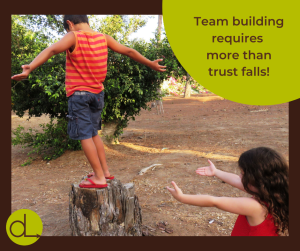
What is a team-building strategy?
A team-building strategy is more than just a collection of trust falls and trivia nights—it’s a deliberate, structured approach to improving how a team works together. A solid strategy identifies where a team struggles, whether miscommunication, lack of trust, or unclear roles, and then applies targeted activities, trainings, and ongoing habits to fix those issues. Think of it like a fitness plan for your team—tailored exercises to build the right muscles, not just a one-time sprint.
If any of these six signs sound familiar, it’s time to stop patching the cracks and start fixing the foundation.
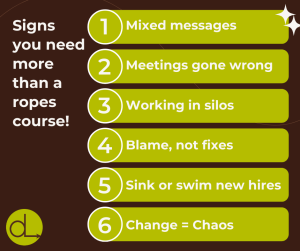
Sign #1: Emails Feel Like Cryptic Riddles
If your inbox is full of messages that require a decoder ring to understand, you’ve got a communication problem. Maybe half the team operates in one-sentence emails while the other half writes novels. Or worse—everyone’s working off different information because no one reads the emails in the first place.
🚨 Warning Signs:
- Projects stall because no one is on the same page.
- Slack messages are either crickets or a never-ending scroll.
- People spend more time clarifying instructions or complaining about others than doing the work.
Sign #2: Meetings Are a Black Hole of Productivity
Ever leave a meeting more confused than when you walked in? If meetings feel like a chaotic mix of over-talking, awkward silences, or the same three people running the show, your team might need help with collaboration.
🚨 Warning Signs:
- The “let’s take this offline” pile keeps growing.
- Decisions don’t get made—just delayed until the next meeting.
- Half the team is zoned out, and the other half dominates the conversation.
Sign #3: Everyone’s a Solo Act
When you ask for input, do you get blank stares and a room full of people suddenly checking their emails? If collaboration feels like herding cats, your team isn’t functioning as a unit.
🚨 Warning Signs:
- People avoid group projects like they’re allergic.
- Assigning tasks feels like playing hot potato.
- Work gets done, but barely anyone knows what the other person is doing.
Sign #4: Blame Travels Faster Than Solutions
Mistakes happen, but if your team treats them like a game of “not it!”—that’s a problem. If people are more focused on avoiding blame than actually fixing things, trust and accountability are slipping.
🚨 Warning Signs:
- Finger-pointing is a competitive sport.
- Problems keep repeating because no one addresses them.
- People hesitate to take ownership for fear of getting thrown under the bus.
Sign #5: New Hires Struggle to Fit In (Or Disappear Fast)
If new employees look lost for the first six months—or bolt before their onboarding checklist is complete—your team dynamic is probably part of the issue. A strong team-building strategy helps people integrate faster.
🚨 Warning Signs:
- New hires don’t know who to go to for help.
- Inside jokes and cliques make them feel like outsiders.
- Turnover is high, and no one seems that surprised.
Sign #6: Big Changes Are Met with Panic (Or Passive Resistance)
Change is inevitable, but if your team reacts to new processes or leadership like someone just set their desk on fire, you’ve got a problem. Teams that lack cohesion struggle to adapt.
🚨 Warning Signs:
- Every new initiative is met with eye rolls and sighs.
- People quietly ignore new processes and keep doing things the old way.
- Resistance to change is so strong you can’t even discuss it productively.
Time to Rethink Your Team-Building Strategy
If any (or all) of these sound familiar, it’s time to do more than just schedule another happy hour. A real team-building strategy can help smooth out these rough edges, making work a little less frustrating—and a lot more productive.
Frequently Asked Questions about Team Building
What exactly is a team-building strategy?
A team-building strategy is a structured approach to improving how a team collaborates, communicates, and solves problems. It’s not just about social events—it’s about targeted activities, workshops, and ongoing habits that help teams function more effectively.
How is this different from a typical team-building event?
A one-off event (like an escape room or a ropes course) can be fun, but a team-building strategy goes deeper. It involves assessing team dynamics and team member strengths, identifying challenges, and applying ongoing methods to strengthen teamwork over time.
How long does a team-building strategy take?
It’s not a one-and-done deal. Some teams benefit from a multi-day retreat, while others incorporate ongoing team coaching, monthly workshops, or quarterly tune-ups. The key is consistency—just like a fitness routine, results come from regular effort.
Will this just feel like forced fun?
No one likes awkward icebreakers. A strong team-building strategy is designed to be practical and engaging, not cringeworthy. The goal isn’t to manufacture fun but to tackle real challenges and improve how the team works together in a way that makes their jobs easier.
Can this help with leadership development?
Absolutely. Strong teams need strong leaders, and many team-building strategies integrate leadership coaching and manager development.
Do remote teams need team-building strategies too?
Yes! If anything, remote teams need them even more. Virtual team-building strategies focus on improving communication, engagement, and trust without relying on in-person interaction.
What if our team already gets along?
Even high-performing teams can benefit. A strong team-building strategy isn’t just about getting along—it’s also about strengthening what’s already working so the team stays adaptable, engaged, and ahead of potential challenges.
Looking for more information about team development? Be sure to check out our Leader’s Guide to Building Stronger Teams.


