

Creating an Intentional Culture for High Performance
Culture isn’t just something your company has—it’s something your company does. Every decision, every interaction, and every process either strengthens or weakens the environment you’re trying to build. An intentional culture doesn’t happen by accident; it’s shaped by daily deliberate choices.
Here’s how to create a workplace where high performance is the natural outcome of a well-designed culture.
What Is an Intentional Culture?
An intentional culture means recognizing that everything—how meetings are run, how feedback is given, how wins are celebrated—shapes the organization’s DNA. It’s not a once-a-year initiative; it’s the daily practice of aligning behaviors, values, and expectations. Instead of hoping for a strong culture, you build one with purpose.
Key elements of an intentional culture:
- Clear expectations that reinforce company values
- Consistency between words and actions from leadership
- Systems that encourage collaboration, accountability, and innovation
- A feedback loop that helps the culture evolve
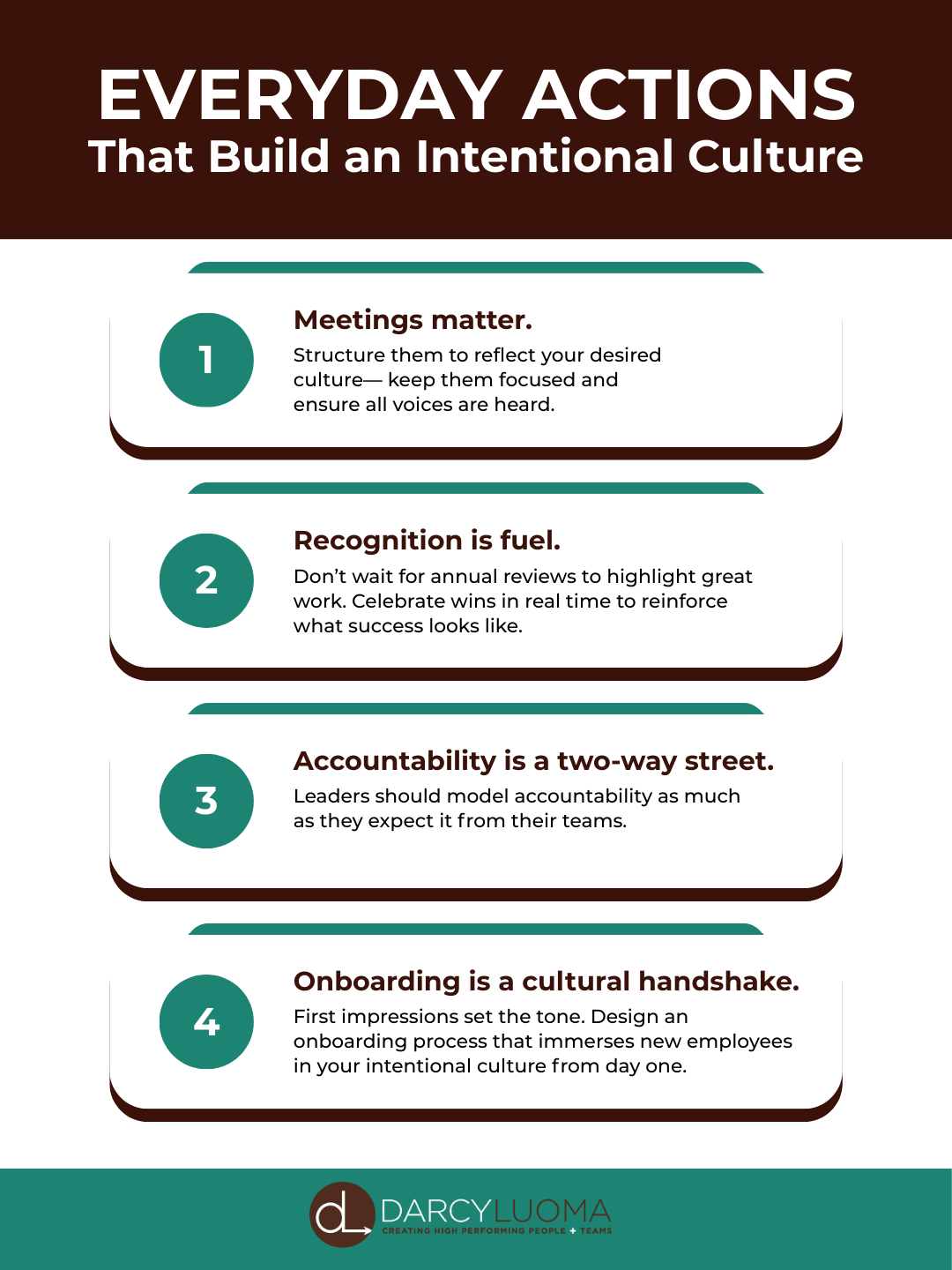
Everyday Actions That Build an Intentional Culture
The little things add up. Culture is formed in the daily moments—not just in corporate retreats or leadership training programs. Here’s how to make sure your culture is intentional, not accidental:
- Meetings matter. Structure them to reflect your desired culture— keep them focused and ensure all voices are heard.
- Recognition is fuel. Don’t wait for annual reviews to highlight great work. Celebrate wins in real time to reinforce what success looks like.
- Accountability is a two-way street. Leaders should model accountability as much as they expect it from their teams.
- Onboarding is a cultural handshake. First impressions set the tone. Design an onboarding process that immerses new employees in your intentional culture from day one.
Embedding Intentional Culture into Decision-Making
Culture can’t be a separate initiative—it has to be baked into everyday decision-making. Every choice is a chance to reinforce the environment you want to create.
- Hire with culture in mind. Skills can be taught, but alignment of mindset and values is non-negotiable.
- Design processes with purpose. Every policy should support the culture you’re building, not just enforce rules.
- Communicate that reflects values. Whether it’s an email or a town hall meeting, ensure messaging aligns with your cultural vision.
Leadership’s Role in Sustaining an Intentional Culture
Leadership isn’t just about making big decisions—it’s about setting the tone in every interaction. Leaders at all levels should be culture architects, reinforcing what matters most through their actions and words.
- Walk the talk. Employees take cues from leadership, so alignment between stated values and actual behaviors is critical.
- Make culture conversations ongoing. Don’t treat culture as a side conversation—integrate it into strategy meetings, check-ins, and goal-setting.
- Empower teams to shape the culture. People support what they help create. Involve employees in defining what the intentional culture looks like in practice.
Final Thought
An intentional culture isn’t built in a day. It is built every day. The key is consistency—recognizing that every action, big or small, contributes to the environment that drives performance. Keep culture at the forefront, and you’ll create a workplace where high performance isn’t forced—it’s simply how things are done.
Frequently Asked Questions
What does it mean to have an intentional culture in the workplace?
An intentional culture means every decision, process, and interaction is purposefully designed to align with the company’s values and goals rather than happening by default. It requires leaders and employees to be mindful of how their behaviors and choices shape the overall work environment. When intentional, culture creates consistency and clarity, ensuring everyone moves in the same direction.
Why is intentional culture important for high performance?
An intentional culture fosters accountability, collaboration, and engagement, directly impacting productivity and overall business success. Employees who feel connected to a strong culture are more motivated, aligned with company goals, and able to work efficiently together. Without intentional culture, organizations risk falling into unproductive habits that hinder performance.
What are some examples of intentional culture in the workplace?
Examples of intentional culture include structured and inclusive meetings where all voices are heard, real-time employee recognition that reinforces company values, and hiring practices that prioritize cultural fit alongside skills. It also involves ensuring communication is transparent and aligned with the organization’s mission. When these elements are embedded into daily operations, they reinforce a culture that drives performance and engagement.
Can company culture be changed?
Yes, company culture can evolve, but it requires consistent effort, leadership commitment, and alignment between stated values and everyday behaviors. Shifting culture starts with identifying the gaps between current practices and desired outcomes and then making intentional adjustments. Regular feedback, clear communication, and reinforcement of new behaviors help ensure long-term cultural transformation.
How does intentional culture impact employee retention?
A strong, intentional culture improves job satisfaction, fosters loyalty, and reduces turnover by creating a work environment where employees feel valued and aligned with company goals. When employees experience a positive, purpose-driven culture, they are more likely to stay and contribute meaningfully. On the other hand, a lack of cultural consistency can lead to disengagement and higher attrition rates.
How does intentional culture differ from company values?
Company values are the guiding principles that define what an organization stands for, while intentional culture is the daily execution of those values through behaviors, systems, and decision-making. Values may exist in a mission statement, but without deliberate action, they remain abstract concepts. Intentional culture ensures those values are actively demonstrated and reinforced at every level of the organization.
Looking for more information about team development? Be sure to check out our Leader’s Guide to Building Stronger Teams.


