
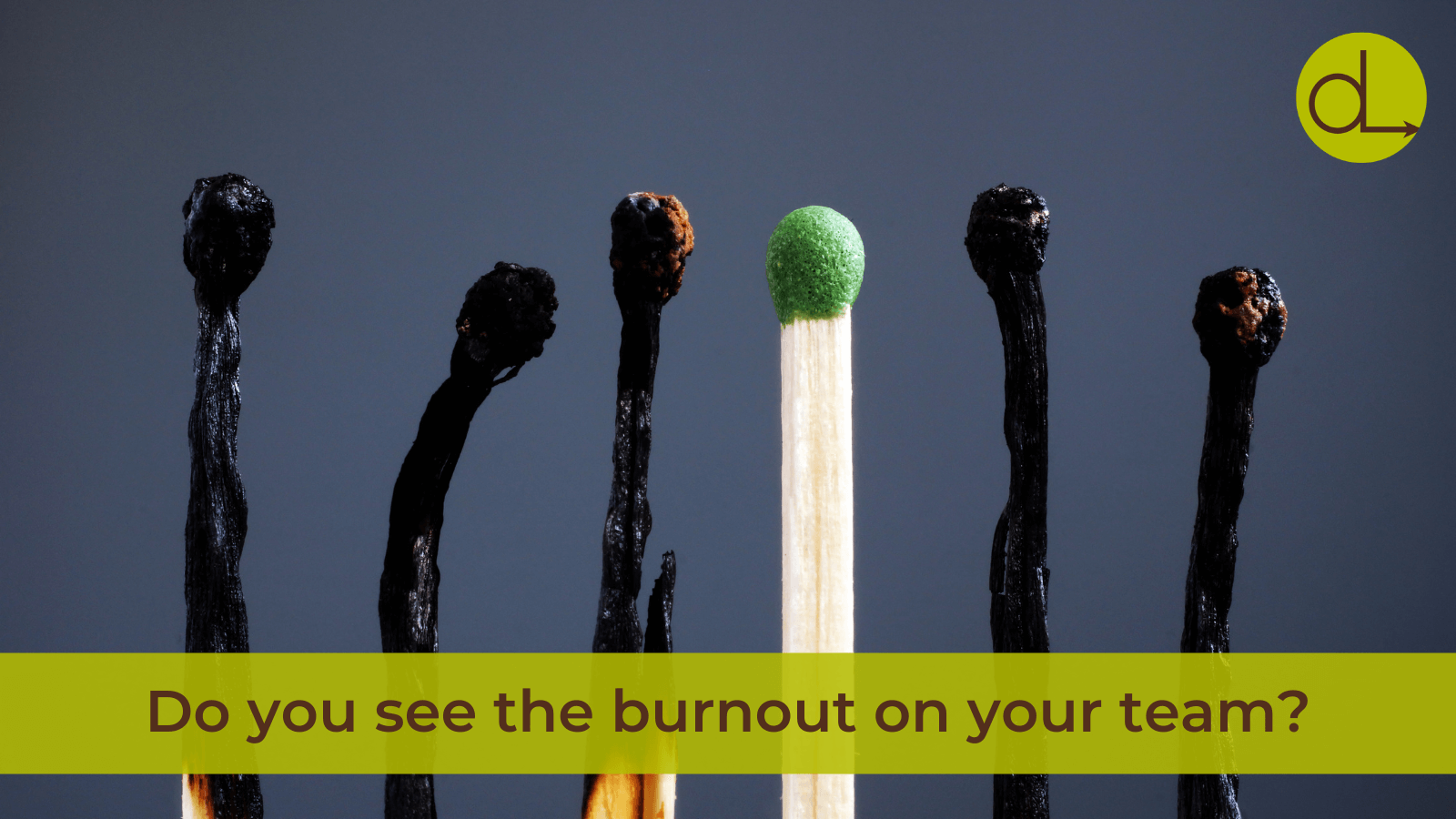

Talk about a blind spot.
In a recent Harris Poll, 89% of managers say that their employees are thriving in their current position.
In the same poll, 24% of employees say they’re thriving, with 76% saying they’re either burned out or ambivalent.
How can there be such a disconnect?
Seeing this poll reminded me of a client who reached out to us after receiving less-than-stellar results in their employee engagement survey. Ted (not his real name) told me he was working so hard to support his employees. He wanted to know what he needed to do so his employees would recognize his efforts.
Not exactly the right question, was it?
Another client contacted us for a team building retreat to explore what challenges the team could take on next. During interviews with team members, we discovered that employees were exhausted. The idea of adding more to their plate was overwhelming, but they were nervous to say anything for fear of appearing to not be a team player.
The manager was ready to take on more, but they had no idea their employees were burning out.
Regardless of the reason, burnout is becoming increasingly prevalent.
It’s essential for managers to acknowledge the signs of burnout and understand its impact on individual employees and on overall team dynamics. Burnout can manifest in various ways, including decreased productivity, disengagement, and emotional exhaustion. By proactively observing these indicators, managers can intervene early and offer much-needed support to their team members.
What is Employee Burnout?
Employee burnout is a state of physical, emotional, and mental exhaustion caused by prolonged exposure to workplace stressors. The World Health Organization defines burnout as a syndrome resulting from chronic workplace stress that has not been successfully managed, characterized by feelings of energy depletion, increased mental distance from one’s job, and reduced professional efficacy.

Create the Environment to Talk about Employee Burnout
Empathy lies at the heart of effective leadership, especially when addressing sensitive issues such as burnout. Managers must strive to put themselves in their employees‘ shoes, seeking to understand their experiences, challenges, and sources of stress. This requires active listening, genuine compassion, and a willingness to validate employees‘ feelings without judgment.
To increase awareness and empathy surrounding employee burnout, here are some specific tips for managers:
- Hold Regular Check-ins: Schedule regular one-on-one check-ins with team members to discuss their workload, stress levels, and overall well-being. Create a safe and non-judgmental space where employees feel comfortable sharing their concerns and challenges.
- Use Empathetic Listening: Practice listening deeply during conversations with employees, focusing on understanding their perspectives and emotions without jumping to solutions or conclusions. Validate their experiences and offer support without minimizing their feelings.
- Encourage Self-Care: Emphasize the importance of self-care and work-life balance within the team culture. Encourage employees to take breaks, prioritize their well-being, and engage in activities that promote relaxation and stress relief.
- Lead by Example: Lead by prioritizing your own well-being and demonstrating healthy work habits. Show vulnerability and openness in discussing your own experiences with stress and burnout, fostering a culture of empathy and support within the team.
By implementing these strategies, managers can increase awareness and empathy surrounding employee burnout, ultimately fostering a workplace culture where team members feel valued, supported, and empowered to prioritize their well-being. Managers who make an effort to have an environment where employees thrive will also see the impact on performance and productivity.
If you are experiencing burnout, as an employee, manager, (or parent or partner for that matter) here’s a workout for you.
Pause: This might be the hardest part! But give yourself a moment to reflect.
Think: What do you need in order to thrive in your current position? What’s in your control? What support do you need?
Act: Take the steps you can to get closer to thriving. (Burnout often occurs after a slow burn. Give yourself the grace to recognize it might take time to move out of it as well.)
Don’t ignore the signs of employee burnout!
The discrepancy highlighted by the Harris Poll underscores a profound blind spot in workplace culture: while managers may believe they’re providing adequate support, the reality of burnout among employees tells a different story.
To bridge this gap, fostering empathy becomes paramount. Recognizing burnout’s impact and taking proactive steps towards well-being not only improves employee satisfaction but also boosts performance and productivity, creating a win-win situation for all.
If you’ve tackled burnout successfully, we’d love to hear your additional tips and tricks!


