

Leadership habits can make or break a team. My coaching client, Marcus, knew that but wasn’t sure which habits to focus on.
He was the kind of manager who prided himself on being available 24/7, always the first to respond and ready with a solution. But over time, his team grew quiet. People stopped offering ideas. Turnover crept up, and Marcus was exhausted.
In an executive coaching session, I asked him a question: “What would happen if you stopped jumping in right away?”
Building better leadership habits isn’t always about adding more to your plate or doing more. Sometimes, it’s about letting go of the things that quietly hold you (and your team) back.
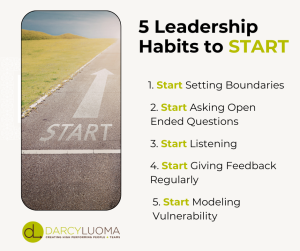
Here are five key habits to improve your leadership abilities, by first learning what to stop.

Leadership Habit #1: Stop Saying Yes to Everything
Leaders are helpers by nature. But if you’re constantly overcommitting, you’re probably not showing up fully for anyone, including yourself.
When you say yes to every request, you’re spreading your time, energy, and focus way too thin. That makes it harder to prioritize what really matters and sets a pace your team might feel pressured to match.
Try this instead: Practice saying no (or “not right now”) to things that don’t align with your goals. Protect time for thinking, planning, and recharging. Great leadership habits start with setting boundaries.
Leadership Habit #2: Stop Talking First
It’s tempting to kick off meetings with your ideas or solutions. But when you always speak first, your team may hesitate to share their own thoughts. Or they might just agree with you to keep things moving.
Try this instead: Let others speak first. Ask open-ended questions. Get curious about their perspectives before jumping in. You’ll hear fresh ideas, build confidence across the team, and model thoughtful leadership.
This small shift can make a big impact on team dynamics, trust, and collaboration.
Leadership Habit #3: Stop Solving Every Problem
We get it—you’re good at fixing things. But constantly jumping in to solve issues for your team can actually slow their growth and make them dependent on you.
Try this instead: When someone brings you a challenge, pause before giving advice. Ask, “What do you think we should do?” Coaching moments like these are where leadership habits really level up.
They also make your job easier in the long run by building a more capable, confident team.
Leadership Habit #4: Stop Avoiding Difficult Conversations
It’s normal to want to keep things positive. But ignoring tension or sugarcoating feedback can lead to confusion, resentment, and a lack of accountability.
Try this instead: Be kind and clear. Address concerns early. Give feedback regularly, not just during performance reviews. Honest conversations are part of healthy leadership habits. And they’re often the ones your team will respect you most for.
Leadership Habit #5: Stop Pretending You Have All the Answers
Nobody expects you to be perfect. And when you act like you’ve got it all figured out, it can make others feel like they can’t speak up or make mistakes.
Try this instead: Show your human side. Ask for input. Say, “I don’t know, but let’s figure it out.” Vulnerability is a strength in leadership. It builds trust and creates psychological safety on your team.
Keep It Simple, Keep It Real
Marcus didn’t transform his leadership by reading a stack of books or disappearing on a silent retreat. He made one intentional shift and stuck with it. That’s how strong leadership habits are built: small steps, repeated often.
You don’t need to overhaul everything. Just start by letting go of what’s not working. Then keep practicing.
Because leadership isn’t a destination. It’s a daily workout.
Leadership Habits: Frequently Asked Questions
How do I know which leadership habit to work on first?
Consider asking your team for feedback. Or look at where you’re consistently frustrated. The habit you need to shift is usually tied to the pain point you keep bumping into.
We also offer 360 assessments if you would like to have more structured feedback from your team members. A 360 assessment provides leaders with a better understanding of how they’re perceived by others on their team and sparks rich discussions on new strategies to take moving forward.
What if my team resists the changes I’m making?
That’s normal. If you’ve always jumped in with answers and now you’re asking more questions, it might throw them off. Let them in on what you’re working on, and keep at it.
Modeling vulnerability and openness by sharing challenges or lessons learned is a great way to show them that you’re all in this together! Check out Overcome the Top 6 Challenges Holding Teams Back if you need a push to get started!
How does coaching help with leadership habits?
A coach can help you identify blind spots, track your progress, and hold you accountable, allowing for more intentional and impactful leadership. Your coach is available to support you as you navigate any challenge or opportunity by increasing awareness, exploring multiple perspectives, and considering the big ideas. New awareness leads to access to new actions to make informed decisions that drive your organization forward. It’s like having a personal trainer for your leadership muscles.
What’s the difference between leadership habits and skills?
Skills are what you can do. Habits are what you actually do, day in and day out. Building habits helps those skills show up consistently, even when things get stressful.
One habit that is especially helpful is to take a moment to Pause. Think. Act. which is the core of our Thoughtfully Fit model. Pause to become aware of your default reaction in the moment, and Think about the choices you have and what’s in your control. Then Act thoughtfully.
Can I develop leadership habits even if I’m not in a formal leadership role?
Absolutely. Leadership isn’t a job title—it’s a daily practice. You don’t need a corner office or a team reporting to you to build leadership habits; you need intention. Leadership shows up in how you listen, how you respond under pressure, how you follow through, and how you treat people when no one’s watching. Every conversation, decision, and challenge is a rep. The more consistently you practice, the stronger your leadership muscle becomes. Then, when a formal role eventually appears, you’re not scrambling to figure it out—you’ve already built the habits, confidence, and credibility to step in and lead well from day one.
Looking for more information about leadership development? Be sure to check out: The Ultimate Guide to Leadership Development.


